Showing posts with label Discrimination. Show all posts

"You've Come a Long Way Baby" or maybe not...


The other day I found a TV channel that plays reruns of the 1960s game show, Password. The host, Allen Lundt, asked the first contestant, a man, "So what do you do for a living?"

The man replied, "I'm an executive in a major marketing company."

Mr. Lundt said, "That's very impressive!"

The host turned to the other contestant, a woman, and said, "So what does your husband do for a living?"

The woman’s jaw drops. Then she speaks in a voice that is barely audible.

I have no memory of what she said because I was still processing the unbelievably chauvinistic question. True, this is the 1960s, so for the host to assume the woman did not work outside of the home is probably not out of line, but still. It was pretty rude.

While on the topic of the 60s, I also recently saw a reference to the 1968 Virginia Slims cigarette slogan: “You've Come a Long Way, Baby.” This struck me as rather timely. How far have women come? At least in 1968 we came as far to have an equal opportunity to get lung cancer.

Dry humor aside, many people do not realize how late women landed the rights women now have. If you’re thinking late 1800s to early 1900s, think again. While some progress was made in the late 1960s, it would take another decade for significant changes.


At the age of 18 in the early 1970s, I blamed the lack of job opportunities more on my age and my having only a high school education than anything else. I didn’t know I would enter a man’s world when I accepted a wildland firefighting job with the U.S. Forest Service in 1976. The words discrimination or sexual harassment were not even in my vocabulary—at least not at first. That summer, one crewmate told me that women belonged barefoot, pregnant, and in the kitchen. Another told me women were weak and helpless, and I should quit and go home. And after several years of experience, a supervisor told me I couldn’t work on his fire crew because “he didn’t hire girls.” Those comments didn’t stop me from working six additional summers, though.

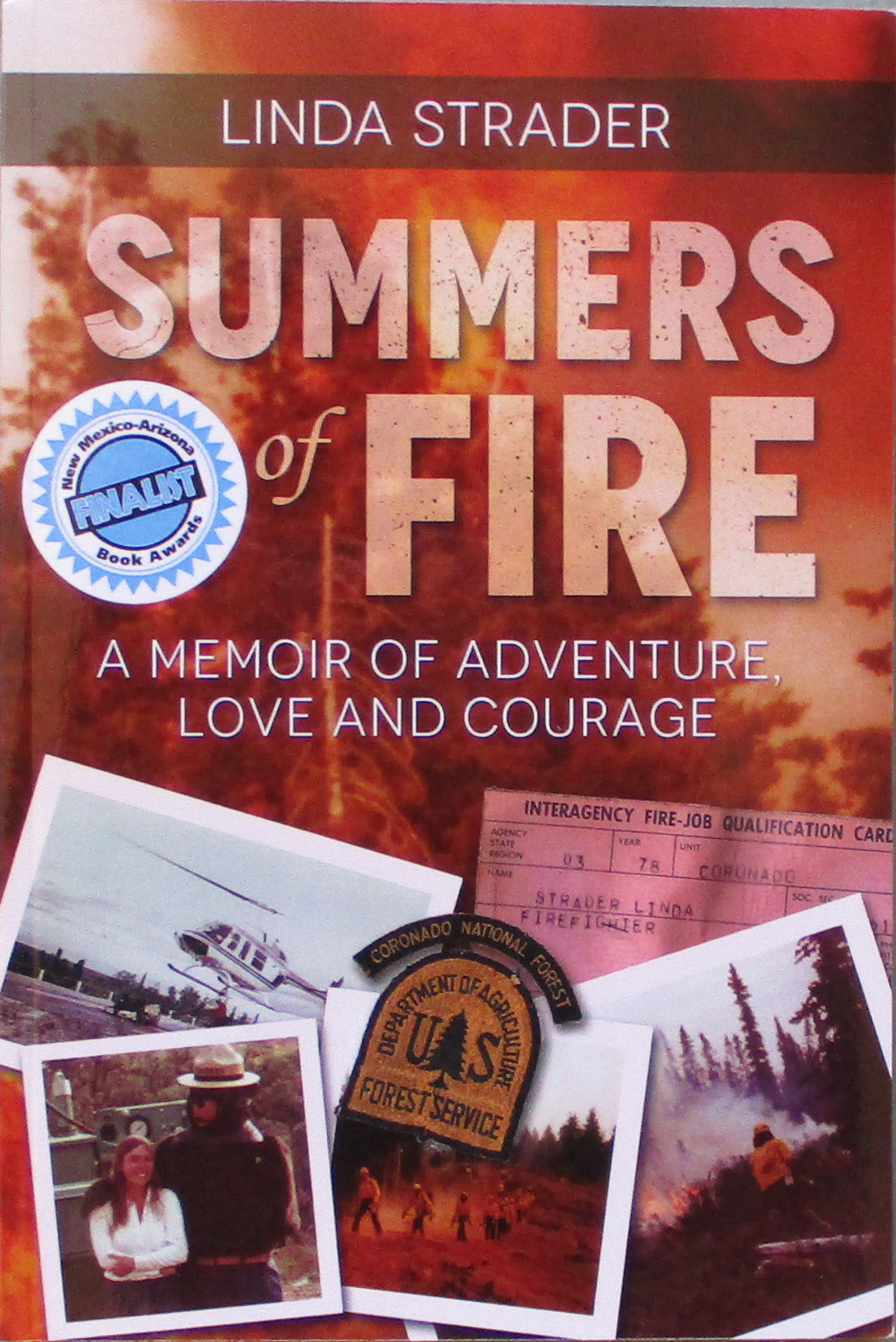
While working on my memoir, Summers of Fire, and later the prequel, Uprooted, I decided to take a look at women in the 1970s. It’s not as though I lived under a rock back then. I do remember proudly subscribing to New Woman magazine because I considered myself a new woman not only because I took on a man’s job, but also because I didn’t see any rush to get married and have kids. The editor invited readers to send in a response to the question: “How did you meet your “new” man?” They would publish replies in a later issue. Because I was dating the man I met on my first fire, of course I sent one in. What a thrill to see it in print a few months later. I also remember following abortion rights in women’s magazines, but not diligently.

Some of what I found I already knew, but there were plenty of history making landmarks that I had no idea had been so recent.

Before 1978, employers could legally refuse to hire a pregnant woman. If she wasn’t and later got pregnant, she could have been fired. Even worse, if a woman was simply of child-bearing age when she applied for a job, employers worried about the “risk” that she could get pregnant, and often would not hire her “just in case.”

An unmarried woman could not obtain contraceptives until 1972—despite the fact that “the pill” became available years earlier. Married women had access to this form of contraception, but it was frowned upon unless their menstrual periods were “unusually difficult.” I could find no references as to what constituted unusually difficult periods and who made that decision. No doubt her male physician.

The first state to allow abortion was New York State in 1970, with remaining states not following suit until the monumental court case Roe vs. Wade. The case led to the Supreme Court decision that the Constitution protects a woman’s liberty to choose to have an abortion without “overly restrictive” government intervention. I won’t get into the recent overturning of that landmark case here. While I think the overturning is appalling and scary, I want to focus on other recently acquired rights.

Credit cards. Did you know that before 1970 a single woman could not obtain a credit and a married woman couldn’t have one without her husband as a cosigner?

When we think of human beings as the property of other human beings, the first thing that comes to mind is slavery, and rightfully so. But did you know that not that long ago, women were considered to be her husband’s “property,” and she had to sacrifice many personal freedoms we now take for granted? How about the right to say “no” if the wife did not want to have sex with her husband. Unbelievably, it took until 1993 before marital rape became a criminal offense.

The Divorce Reform Act, passed in 1969, changed the end of a marriage in a significant way. Divorces could now be based on “irreconcilable differences,” eliminating finger pointing and fault-finding which often resulted in expensive and lengthy divorce litigation. This act initiated the long overdue 50/50 settlement.

Another bias I’d never thought about was jury duty. It took until 1975 for all U.S. states to allow women jurors. Why? Because men thought that women were too frail and emotional to hear detailed testimony surrounding violent crimes.

What about a college degree? Before the late 1960s, if a woman wanted a degree from a prestigious college, she had to set her sights low. No Ivy League colleges allowed women. Harvard skirted around the problem by creating Radcliffe in 1969, but it took 11 more years for all Ivy League colleges to allow women to enroll.

And what about workplace hassles in the 60s and 70s? Not only did women fear losing their job simply because they wanted children, but they either had to put up with sexual harassment or quit. Sadly, many women could not afford to quit, or simply thought it was just part of a normal day at the office. It wasn’t until 1977 that legal recourse against sexual harassment at work finally became available.

As for discrimination in the hiring process? The Equal Employment Opportunity (EEO) Act of 1972 expanded Title VII of the 1964 Civil Rights Act to increase protection of minorities and women in both public and private-sector employment. At last, women could not be denied a job just because they were female. Not that it still didn’t happen and still does happen, I’m sad to say. It was hard to prove 40 years ago, and it still is.

And last, but not least, it took until 2013 for women to be allowed into combat duty—a controversial decision to this day.

It’s now 2022. What’s going on? Roe vs. Wade has been rescinded. The wage gap between men and women is sitting at women earning 22% less than men. This discrepancy sure isn’t because of education. Stats show that women do better in college than men. Not only do more women have degrees, but more women advance to obtain graduate and doctorate degrees, and if that’s not enough, they graduate with honors.

Remember that slogan, “You’ve come a long way, baby?” Well, apparently women came a long way, and now have taken several huge steps backwards. What are your thoughts? Feel free to leave a comment.

Teaching kids about gender bias

An eye opening video how even today, kids pick up on stereotyping at an early age. Here's a great way to change that!


My interview on Stories that Empower

I had the honor of meeting Sean Farjadi on his podcast "Stories That Empower." Here's a summary from Sean of what we talked about:

Linda experienced harassment as one of the first women on a U.S. Forest Service fire crew. The more they harassed her, the more she didn't want to quit, e.g. fires were not the only things she fought. When Linda encountered an obstacle, she would come up with alternatives. After losing her job, losing her mom and getting divorced, she rebuilt her life for the 3rd time. Writing her book enabled Linda to reconnect with her 20s and remind her that she is tenacious and resilient. She reinvented herself and starting teaching others. Linda shares these powerful nuggets of life wisdom:
- we are more resilient than we think
- figure out what's holding you back
- confirm assumptions that explain why you're stuck
- don't let people stop you from what you want to do
- permit yourself to say no
- trust your gut
- there are always options


Come have a listen to the full podcast! 

Dateline NBC talks to women about changing the Forest Service

Here I was hoping to have an in-depth discussion of solutions! But no...not here. How disappointing. 

DATELINE NBC 

More proof that things remain the same


I'm often asked if things have improved for women on fire crews. Here's just one more testimony I found today in Dame Magazine that the answer is: NO.

A humorous look at a serious topic-sexual harassment in the workplace

I found this video on Facebook, and while it is funny, it's also sad and frustrating. I highly recommend you watch it to the end. The interview with Anita Hill is quite interesting.


In the news! The head of the U.S. Forest Service resigns


Amidst the backlash of the PBS video where woman stepped up to voice the horrendous treatment they experience while working for the U.S. Forest Service, Chief Tony Tooke resigns. Amazing. I hope this signals major changes! It would be about time.

Women speak out about mistreatment in the U.S. Forest Service


I was blacklisted when I reported discrimination in 1978...here it is, 40 years later, and nothing has changed. What needs to be done? Why do men think this behavior is acceptable?


What happened to the Federal Women's Program?


The High Country News just published yet another article on the challenges of being a woman on a wildland fire crew. Again, it brought back the anger and resentment of being treated as less than equal.

One thing I’ve not seen in the articles published lately, is much about the Federal Women’s Program (FWP). The FWP was formed in response to adding gender to the Equal Employment Opportunity Act (EEO) of 1969. Established in the early 1970’s to promote women in the Forest Service as the entered a “men only” world, this organization held workshops to educate women not only on how to advance careers, but what to do in the event they face sexual discrimination, harassment, or a hostile workplace.

My experiences with FWP began in 1976, near the end of my first fire season. A five-day workshop was held in Patagonia, AZ, where 36 women from the Coronado National Forest gathered to learn what FWP was all about. Out of those 36 women, only three were firefighters, including me.

After the first session, I began to realize women weren’t welcome in the Forest Service unless they were timekeepers (my first Forest Service job), fire lookouts, or in other office work positions. While two of men on my crew made it clear they didn’t want me there, the rest of the guys accepted me, or so I thought. One of the other woman firefighters told me how horribly she was treated, including being left behind while the men went to fires. At least that hadn’t happened to me. I fought six fires that summer.

On the last day of the workshop, the facilitator gave us an assignment: interview the men we worked with and ask them their opinion of women on fire crews. We would then meet at a later date to discuss our findings.

Not remotely concerned about this, I approached the assignment thinking all would be fine. But it was not. I learned a very painful lesson that day, one that changed my sunny disposition and career outlook dramatically. Only three of the men I’d worked with all summer approved of my presence on the crew.

However, that didn’t stop me from pursuing this career. It wasn’t until 1978 I was denied a job outright because I was female. Using the resources I was given by the FWP facilitator, I filed an EEO complaint against the man who told me he would not give me a job I was fully qualified for because he “didn’t hire women on his hotshot crew.” What happened? Absolutely nothing. He denied the conversation took place. That was just the beginning, however, because later I would discover that this complaint would follow me to another National Forest, and blacklist me forever as a troublemaker. Where was the FWP during this? Nowhere to be found.

Women still have a long ways to go in this field. It’s gratifying to see more published articles, but is that enough to change attitudes of hiring managers and fellow crewmembers? I used to blame it on the times (mid 1970’s) and old-school thinking, but that doesn’t explain young men today for thinking the exact same way as men thought of women 40 years ago.

So where is FWP now? How is it helping women in the Forest Service? From what I’ve read, the organization still exists, but is far from being active in the cause it was formed to advance. Changing attitudes will take more than education, I’m afraid. It appears the only thing that will change attitudes was, and still is, women proving they have what it takes.

Good news and bad news about women taking on firefighting


I stumbled on an article this morning in the Salt Lake Tribune about how efforts to recruit more women into wildland firefighting jobs made by the U.S. Forest Service and former women firefighters seems to be working. While the average number of women in these jobs nationwide is about 10% (which is 10x the number I found in my research), these efforts have bumped the percentages up significantly.

What great news! It was also heartening to read other women's perspectives on why they loved their fire jobs. They all touched on the reasons why I loved my job. The camaraderie, satisfaction, excitement, being outdoors...all of it.

I jumped to the comment section of the article because I wanted to add a few thoughts about my former fire career, and how good it was to hear more women were discovering all of the wonderful things about not only a job working in nature, but one filled with excitement, prestige, satisfaction and pride.

Reading through the comments first before posting, my stomach turned. Here were men bashing women, wondering why these women wanted to be "male", or if they were just filling a "women" quota, and other derogatory statements, including references to women envying and wishing they had a certain male piece of anatomy. Exactly the same kind of crap I used to hear over 30 years ago. These guys must feel their manhood is being threatened.

When I became a firefighter, I did NOT take on the job because I wanted to be a man or to because I wanted to be better than the men; I took the job because I thought I would like the work. I loved my job, did my job quite well as a matter-of-fact, and resent any man telling me that I was trying to be a "man" for choosing that career path.

To women in men's jobs: Stick with it! Stand your ground! Please don't ever let men put you down or make you quit. Some day I hope we will no longer have to prove our abilities. May that day come soon.

Women in the Forest Service


Forty years ago, I become one of the first women firefighters for the U.S. Forest Service. Not because I had anything to prove, not because I wanted to meet men, I took this job because I thought I would love the work. And I did.

Discrimination never crossed my mind. Why would men discriminate against me? I naively thought. I was a hard worker, never complained, and felt quite proud to be part of a team. Soon though, I would discover that although the guys seemed to like me, they resented my presence. Some more than resented my presence, they denied me positions because I was a woman.

Fast forward to present time. Nothing has changed! Men still resent women in male dominated fields. This article in the Huffington Post exemplifies just how hard and degrading it still is for a woman in a man's world.

I've been told I was lucky that my Forest Service career ended after an injury, and maybe they are right. Would I have been able to tough out 40 years of harassment to stay in the field I loved? Hard to say.. But I sure commend the women who stick with it. So here's to you women in "men's jobs". Don't give up. Please don't give up.

Former woman firefighter wins 10 year court case for sexual harassment


Finally, after 10 years, Michelle Maliniak won her battle against the Tucson Fire Department for sexual harassment. It’s amazing how long this took.

Despite 21 years on the job, Ms. Maliniak never got the respect she deserved from her male counterparts. It wasn’t enough to prove she could handle the work. It wasn’t enough she worked twice as hard to prove she could handle the work. She endured sexual innuendos disguised as pranks, her car was vandalized, and offensive and degrading notes were strategically placed for her to see.

Almost everything Ms. Maliniak went through I experienced over 30 years ago. Are men still so threatened by a strong woman able to hold her own? Sad, but apparently true. No wonder fewer than 1% of firefighters nationwide are women.

For those women who take on these jobs, stay strong. Don’t give up what you love. If you do, then the men who made you quit win. Don’t let them win.